
Selling a house is one of those things people swear they will do “someday.” Someday when the kids are done with school.
Someday when work calms down.
Someday when the market looks better.
Someday when you finally paint that one room that’s been half done for… a while. And then summer shows up, and weirdly, a lot of people suddenly get serious.
If you have even the tiniest thought in the back of your head like, maybe we should sell this year , summer can be the season where that thought turns into a clean plan. Not always. Not for everyone. But often enough that it’s worth paying attention to.
So here are five signs summer might actually be your window.
Not “perfect” in the Instagram sense. More like perfect as in, the conditions around you are lining up and the process might be smoother than it would be in, say, November.
1. Your neighborhood suddenly looks like it’s trying to impress someone
You know what I mean.
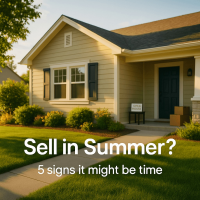
The lawns are cut. The flower beds wake up. The trees fill in. People repaint their front doors like it’s a community competition. Even the streets feel brighter because the sun is out longer, and everything just looks… nicer.
And this matters more than most homeowners realize.
Summer is curb appeal season. Not because buyers are shallow (ok, a little). But because a house doesn’t get judged one detail at a time. It gets judged as a feeling first.
When a buyer pulls up and the place looks warm and alive, they walk in already leaning yes. They picture cookouts. Morning coffee on the porch. Kids running around. The backyard suddenly feels like an extra room.
In winter, the same home can feel cold, cramped, even a little tired. Same square footage. Same layout. Different emotional reaction.
Summer gives you a natural advantage here, especially if you have:
• A yard, patio, deck, pool, or even just a decent outdoor space
• Good natural light inside (which is basically everyone’s favorite feature) • Landscaping you’ve already put work into, even if it’s modest
And the best part is you don’t need a full makeover. Summer does a lot of the heavy lifting. A fresh mow, some mulch, a few planters, and suddenly your front photo looks like it belongs on a listing people click.
If you’re walking up to your house lately and thinking, dang, it actually looks good right now, that’s a sign.
2. You’re already in “home mode” and tackling projects without hating your life
There’s something about summer that makes basic home tasks feel less miserable. You can paint with the windows open.
You can clear out the garage without freezing.
You can donate stuff without trudging through rain.
You can do minor repairs and not feel like you’re living in a construction zone for weeks. A lot of sellers wait too long because prepping a home feels overwhelming. But summer is when
most people naturally start doing the exact things that help a home sell.
Stuff like:
• Decluttering closets because you’re switching seasonal clothes anyway • Cleaning out the basement because you’re looking for camping gear • Fixing the screen door because you’re tired of bugs
• Touching up paint because sunlight is showing every scuff on the wall That momentum is valuable.
When you sell, you need a short burst of effort. Not perfection. Just enough to make the home feel cared for and move in ready. And summer is the season where that burst is easiest to pull off, because your schedule and energy tend to cooperate a little more.
Also, practical bonus. Contractors and handypeople are busy, yes, but they’re also fully operational. In some colder regions, winter slows down exterior work completely. In summer you can actually get things done. Roof repairs. Fence fixes. Deck staining. Pressure washing. The stuff that boosts value fast.
If you’ve noticed you’re already making progress around the house, you might be closer to “ready to list” than you think.
3. Your local market feels active and you’re seeing “For Sale” signs actually move
This one is simple. If homes around you are listing and selling quickly, it’s usually easier to sell yours too.
Summer tends to be the most active time of year for real estate in many areas because buyers come out in force. Families want to move before a new school year starts. People have more flexibility with time off. Longer daylight hours make it easier to schedule showings after work. It’s just… easier to shop for a home when it doesn’t feel like a chore.
And activity creates more activity.
When buyers feel like other buyers are looking, they move faster. They’re more decisive. They show up with pre approvals. They book showings quickly because they don’t want to miss out.
Now, I’m not going to pretend every summer is automatically a seller’s dream. Market conditions matter. Interest rates matter. Inventory matters. Your specific neighborhood matters.
But you don’t need to be an economist to notice what’s happening around you.
Here are a few little signals to watch for:
• Homes in your area are going under contract within a couple of weeks (or less) • Open houses look busy, cars lining the street, people actually showing up • You’re seeing fewer price reductions on listings nearby
• Your neighbor listed and it didn’t just sit there, it moved
When the market is “awake,” selling is often less stressful. You get more showings, more chances for the right buyer to walk in, more leverage in negotiations.
And if you’re already noticing that the neighborhood feels active, summer might be your season to ride that wave instead of waiting for it to cool off.
4. Your schedule (and your family’s schedule) is finally flexible enough to handle the chaos
This is the part people underestimate.
Selling a home is logistical. It’s not just putting a sign in the yard and waiting for money to appear. It’s cleaning, staging, photos, showings, inspections, appraisals, repairs, packing, and then trying to live like a minimalist monk in the middle of all of it.
Summer makes this easier for a lot of households, for a few reasons.
Kids are out of school, which can go either way. But it often means you can travel or stay with family for a weekend while the house is shown. Or you can schedule appointments without the constant school run. Even if the house feels noisier in summer, you have more freedom to manage it.
Work schedules often loosen up a bit too. People take PTO. Fridays are lighter. There’s more daylight, which means you can squeeze in a showing at 7 pm and still have time to reset the house after.
If you’ve ever tried selling during a packed season, like the holidays, you know how brutal it can be. Your house needs to be spotless while also hosting your life.
Summer is not stress free, but it can be more workable.
Some practical examples where summer flexibility helps:
• You can plan a weekend trip while your agent stacks showings
• You can do midweek showings because you’re not juggling school schedules
• You can handle repair appointments during longer days
• You can start packing early without feeling like you’re living in darkness at 5 pm
If the idea of showings doesn’t instantly make you want to hide under a blanket, that’s a sign. It means your life has enough breathing room right now to actually execute a sale.
5. You want your next move to happen before fall hits, and that deadline feels real
This one is big.
A lot of people don’t actually want to sell “in summer.” They want to be done by fall.
They want to be in the new place before school starts. Or at least before the weather turns. They want to be settled before holiday season. They want to stop thinking about it.
And summer is the season that gives you the runway to do that.
Here’s a rough timeline that’s pretty common, even though every situation is different: • 1 to 3 weeks to prep the home (declutter, touch ups, minor fixes)
• 1 week for photos and listing launch
• 1 to 4 weeks to find the right buyer (sometimes faster, sometimes not) • 3 to 6 weeks for escrow, inspections, financing, closing
That can add up fast.
If you list in early summer, you have a decent chance of closing before fall. If you wait until late summer, you can still make it, but you’re tightening the window. If you wait until fall, you might be selling during a slower season depending on your area.
So if you’re thinking things like:
• “It would be nice to start fresh before the holidays”
• “I don’t want to be moving in the winter”
• “I’d rather not deal with showings when it’s dark and cold”
• “I want to be in a new school district before the year starts”
…then summer is probably not just a nice time to sell. It’s the strategic time.
Also, buyers feel this timeline pressure too. Plenty of buyers are shopping in summer because they need to be moved by a certain date. That urgency can work in your favor, as long as your home is priced right and presented well.
A quick reality check before you decide
Summer can be a great time to sell. But “great time” doesn’t mean “no effort required.” A few things that can trip sellers up in summer, and it’s better to know now: • Heat can make showings uncomfortable if your AC is weak or your home gets stuffy
• Busy schedules mean buyers sometimes only view homes on weekends, so weekends can get intense
• Competition can be higher because more sellers list in summer too
• If your home is near a loud summer hotspot (pool, park, events), the vibe might not be ideal during showings
None of these are deal breakers. They’re just part of the deal.
The good news is most of them are manageable with small adjustments. Schedule showings during cooler times. Make sure the home smells clean, not like air freshener. Keep blinds positioned to control harsh sunlight. Set the thermostat to comfortable, not freezing, just comfortable.
The point is, summer gives you tailwinds, but you still steer.
So… is summer your moment?
If you’re nodding along to even two or three of these, it’s worth taking the next step. Not signing papers tomorrow. Just taking one practical step.
Maybe that’s getting a quick home value estimate. Maybe it’s walking through your house with a notepad and writing down what you would fix if you were the buyer. Maybe it’s talking to a local agent about what homes like yours are actually selling for, not what they’re listed for.
Because the biggest mistake I see people make is waiting for a “perfect” time that never arrives.
Summer might not be perfect. But if your house is looking good, the market is active, your schedule has breathing room, and you’re craving a fresh start before fall. Yeah. That’s a pretty solid combination.
And sometimes that’s all you need.
FAQs (Frequently Asked Questions)
Summer is often the best time to sell a house because the neighborhood looks vibrant with cut lawns, blooming flowers, and longer daylight hours, which enhances curb appeal and creates a warm, inviting feeling for buyers. Additionally, buyers are more active during summer, making the selling process smoother.
In summer, well-maintained yards, bright natural light, and lively outdoor spaces create an emotional connection for buyers. They envision enjoyable activities like cookouts and morning coffee on the porch, making them more inclined to say yes to the home.
Summer makes it easier to do tasks like painting with open windows, decluttering closets during seasonal changes, fixing screens to keep bugs out, cleaning garages and basements, and completing exterior repairs such as roof fixes or deck staining since contractors are fully operational.
Look for signs like homes in your area going under contract quickly (within weeks), busy open houses with many visitors, fewer price reductions on nearby listings, and neighbors successfully selling their homes without long waits. These indicate a lively market favorable for selling.
Not necessarily. While summer often offers favorable conditions like active buyers and better curb appeal, factors such as interest rates, inventory levels, and specific neighborhood dynamics also influence how quickly your house will sell.
Sellers should aim for readiness rather than perfection—focus on making the home feel cared for and move-in ready with manageable efforts like decluttering and minor repairs. Summer’s energy and schedule flexibility make this short burst of preparation easier and more effective.