
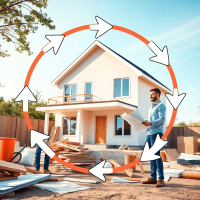
If you have been around real estate TikTok, BiggerPockets, or that one friend who suddenly has “doors” and talks about cash flow at dinner, you have heard of BRRRR.
Buy, Rehab, Rent, Refinance, Repeat.
It sounds like a cute acronym. Almost too clean. Like it should not work in real life. But it does work, sometimes really well. And other times it turns into a weird money pit where you realize you hate contractors and you now have opinions about plumbing vents. Strong opinions.
So let’s slow it down and explain BRRRR like a normal person. What it is, why it works, where it breaks, and how to run the numbers without lying to yourself.
What BRRRR actually means
BRRRR is a real estate investing method where you try to recycle the same chunk of capital into multiple rental properties.
The steps are:
1. Buy a property (usually undervalued, distressed, or just ugly).
2. Rehab it to increase its value and make it rent ready.
3. Rent it out to a tenant.
4. Refinance with a new loan based on the improved value.
5. Repeat by using the cash you pulled out (or freed up) to do the next deal.
The goal is not just owning a rental. The goal is building a portfolio faster because you are not permanently “stuck” with your initial down payment.
In a best case BRRRR, you get most of your money back. Sometimes all of it. Sometimes more than all of it (cash out refi). And you still own the asset.
That’s the dream people are pointing at when they say “infinite returns.” It’s not magic. It’s basically: buy below value, force appreciation with rehab, then refinance at the new appraised value.
But we need to talk about the details. Because this is where people get wrecked. Step 1: Buy (the deal is made here)
BRRRR starts with buying the right property. Not a perfect property. Usually the opposite. You are typically looking for one or more of these:
• Outdated condition, but good bones.
• Cosmetic disaster, not structural nightmare.
• Motivated seller (estate sale, tired landlord, deferred maintenance). • Bad listing photos, bad marketing, sitting on market.
• A property you can buy below what it would be worth after repairs. In BRRRR land, you care about three numbers immediately:
• Purchase price
• Rehab budget
• After Repair Value (ARV)
ARV is what the property should appraise for after the rehab. Not what you hope. Not what some optimistic agent says in a hurry. ARV needs comps.
A simple way investors frame the buy decision is:
Can I buy + rehab this for meaningfully less than ARV?
Because that gap is where your refinance and “money back” comes from.
• They overestimate ARV.
• They underestimate rehab.
• They forget holding costs (mortgage, utilities, insurance, taxes while renovating). • They buy in a rental market where rents do not support the new loan payment.
• They buy the “cheapest house” in the wrong area, then wonder why tenant quality is rough and turnover is constant.
BRRRR is not only a renovation strategy. It’s also a neighborhood and tenant strategy. The rent has to make sense later.
Step 2: Rehab (the value creation part)
Rehab is where you force appreciation. You take a property that is not financeable or not desirable (or both), and you make it something a bank will lend on and a tenant will pay for.
Rehab can be light:
• paint, flooring, fixtures, landscaping
Or medium:
• kitchen refresh, bathroom updates, new appliances, roof repair
Or heavy:
• full electrical, plumbing, foundation work, layout changes
In BRRRR, heavy rehabs can work, but your margin for error gets thinner. Because time is money and surprises are common.
You do not renovate for your taste. You renovate for rentability and durability. Landlord finishes. Not luxury flips.
That usually means:
• LVP flooring over carpet (less headache)
• solid but basic cabinets
• simple paint colors
• fixtures that look decent but are easy to replace
• focusing on mechanicals that reduce future maintenance calls
Also, keep it consistent. Tenants like clean, functional, and predictable.
A practical rehab budget should include:
• labor + materials
• permit fees (if needed)
• dumpster / hauling
• contingency (seriously) usually 10 to 20 percent
• timeline padding
If you are new, assume you will be slow at first. Even if you are “good at managing projects.” Real estate rehabs are their own thing.
And yes, you can save money doing some work yourself. But you can also slow the project down so much that your holding costs eat the savings. So just be honest about your tradeoff.
Step 3: Rent (stabilize the property)
Once rehab is done, you rent it out. This step sounds simple. It is not always simple.
For the refinance to go smoothly, lenders often want the property to be “stabilized.” Meaning it is rented, and the rent is documented. Some lenders want a lease in place. Some want seasoning. Some do not care as much. It depends on the loan product.
But from an investor standpoint, the rent step is about one thing:
Can this property cash flow (or at least not bleed) after the refinance?
Because you can win on appraisal and still lose on monthly payment.
Do not set rent based on vibes.
Use:
• comparable rentals in the area (not just listed, but actually rented if you can find it) • property management feedback
• bedroom count, parking, laundry setup, yard, school zone
• seasonality (some markets rent easier in spring/summer)
And please, bake in vacancy and maintenance. If your spreadsheet assumes 0 vacancy forever, it is not a spreadsheet. It is fan fiction.
Step 4: Refinance (where BRRRR “recycles” the money)
Refinancing is the step that makes BRRRR BRRRR.
After rehab, ideally the property is worth more than what you have into it (purchase + rehab + holding). You refinance into a long term loan based on the new appraised value.
This new loan pays off your short term financing (or your cash). Any leftover cash after closing costs can come back to you.
There are a few common refinance paths:
• Cash purchase !’ refinance (common if you can buy cheap with cash) • Hard money / private money !’ refinance (very common BRRRR setup) • Conventional mortgage !’ refinance (works, but you may have seasoning rules) • DSCR loan refinance (often used by investors, focuses on rent coverage)
LTV (Loan to Value): If a lender offers 75% LTV and the property appraises at $200,000, your new loan might be up to $150,000.
Seasoning: Some lenders require you to own the property for a certain period before they will lend based on the new value. Others will lend sooner but maybe at different terms. This matters a lot. Ask before you buy.
Appraisal risk: If the appraisal comes in lower than expected, you might not get your money back. You might have to bring cash to close. Or you might be stuck waiting.
Also, refinance costs money. Origination fees, appraisal, title, escrow, sometimes points. Do not ignore that.
Step 5: Repeat (the scaling part)
If you successfully get cash back, the “repeat” step is simply taking that freed capital and buying the next property.
This is why BRRRR can scale faster than saving up 20% down payments over and over. But repetition only works if your first deal is stable.
If you pulled out money but the property is fragile (high maintenance, bad tenant base, thin cash flow), you are just stacking stress. The portfolio grows, but so does the chance you get punched in the mouth by an expensive repair at the worst time.
A simple BRRRR example (numbers)
Let’s do a basic example. Not perfect, just realistic enough.
• Purchase price: $120,000
• Rehab: $30,000
• Holding + closing costs during rehab: $10,000
• Total cash invested: $160,000
After rehab, you believe ARV is $210,000.
You refinance at 75% LTV:
• New loan amount: 0.75 x $210,000 = $157,500
If your total invested was $160,000, you are almost “all in” and mostly getting your money back, but not fully. You might leave a little in the deal, or the loan might cover slightly more depending on actual costs and terms. Closing costs on the refi can also reduce cash back.
Now you own a rental with a $157,500 loan.
If rent is, say, $1,850/month, you then subtract:
• mortgage (P&I)
• taxes and insurance
• property management (even if you self manage, budget something)
• vacancy
• repairs and CapEx
If after all that you are netting $200/month, cool, maybe. If you are netting negative, you basically bought yourself a job.
BRRRR is two wins, not one:
1. Equity created
2. Rent that supports the debt
You want both.
Why BRRRR is powerful (when it works)
BRRRR is basically a leverage and velocity strategy.
It can help you:
• acquire more rentals with the same starting capital
• build forced equity through renovation
• lower your long term cost of capital (refi out of expensive money into long term debt) • create a portfolio that pays down over time while rents rise (hopefully) And psychologically, it is momentum. One deal leads to the next. That is why people love it. The real risks people gloss over
BRRRR content online can feel like: buy ugly house, paint it gray, get all money back, repeat until rich.
Real life has friction.
Here are the big risks.
Contractor delays. Permit delays. Materials backorders. Surprise plumbing. Surprise electrical. Surprise termites. It stacks.
Every extra month is holding costs and opportunity cost.
Even if you did a great rehab, appraisers rely on comps. If your market does not have strong comps, or if you overimproved, you might not get the value you expected.
And if you bought in a declining area, the market might not reward your improvements.
If you are using short term financing and planning a refi, you are exposed to rate risk. If rates jump, your refi payment might crush your cash flow.
Also lender guidelines change. Seasoning, DSCR requirements, reserve requirements. All that.
Sometimes you rehab and think, surely this gets top rent. Then the market says no.
Or you find out that tenants in that area are extremely price sensitive. Or you get higher vacancy than expected. Or you have higher turnover.
The more you pull out, the higher the loan balance, and the higher the payment. It can turn a great rental into a barely ok rental.
This is why some investors intentionally do not max out the cash out refi. They leave equity in the deal to keep payments comfortable.
Boring is good in rentals.
How to know if a BRRRR deal is “good”
I like using a few filters. Not fancy, just sanity checks.
Is there enough spread between all in cost and expected appraisal value?
All in cost includes purchase, rehab, holding, closing, and a buffer.
If your deal only works if everything goes perfectly, it is not a deal. It is a performance.
Run the numbers on the refi loan, then include realistic expenses:
• vacancy (5 to 10% is common to model)
• repairs and maintenance
• CapEx (big stuff like roof, HVAC, water heater)
• property management (even if you self manage, include it as a cost) • taxes and insurance (do not underestimate insurance lately)
If it still cash flows, great. If it breaks, you either need a better purchase price, better rent, lower rehab cost, or a different financing structure.
Ask: if the refinance fails, what do I do?
Could you:
• sell it and still not lose your shirt?
• rent it as is with your current financing for a while?
• pivot to mid term rental (travel nurses, etc) in your market?
• bring extra cash to close if appraisal is light?
BRRRR gets safer when you have multiple exits.
Financing options people actually use for BRRRR
A few common setups:
Fast and clean. Then refinance. Downside is you need a lot of cash upfront.
Short term, higher rates, often interest only. Good for speed. Bad if your rehab takes forever. Usually requires experience, but not always.
Friends, family, local investors. Terms vary. Can be flexible, can also get awkward if the project goes sideways. Put it in writing.
Cheaper long term rates sometimes, but can come with seasoning and renovation limitations, plus DTI constraints.
Underwritten on the property’s income rather than your personal income (generally). Great for scaling. Rates and fees can be higher.
The key is matching your financing to your timeline. If you need 6 months but your money is priced like you need 3 months, that hurts.
BRRRR vs flipping (quick comparison)
BRRRR and flipping both often start the same way. Buy a distressed property and rehab it. The difference is the end.
• Flip: you sell, pay taxes, and your capital is back (minus tax and transaction costs).
• BRRRR: you keep the asset, refinance, and aim for long term wealth building through rental income and appreciation.
Flipping can be great for generating chunks of cash. BRRRR is more about building a portfolio that can run for years.
Some people do both. Flip a few to build a cash pile, then BRRRR into long term rentals. A few practical BRRRR tips (stuff that’s not glamorous)
• Get multiple contractor bids. Even if you already “have a guy.”
• Walk the property with a contractor before closing if you can.
• Over communicate scope. Write it down. Line items. Materials. Who buys what. • Take rehab photos. Appraisers like documentation.
• Do not overimprove for the neighborhood. It rarely pays.
• Build reserves. Rentals are calmer when you have a repair fund.
• Consider a property manager early, even if you plan to self manage. Their rent opinion and tenant expectations can save you.
Let’s wrap it up
BRRRR is simple on paper and messy in practice. But it is one of the more proven ways regular people build rental portfolios faster.
Buy right, rehab with discipline, rent to stabilize, refinance based on real comps, then repeat with whatever capital you freed up.
If you take one thing from this, let it be this: BRRRR is not just about getting your money back. It is about ending up with a rental that can breathe. Cash flow, reserves, and a property you do not dread owning.
That’s the version of BRRRR that actually lasts.
FAQs (Frequently Asked Questions)
BRRRR stands for Buy, Rehab, Rent, Refinance, Repeat. It’s a strategy where investors buy undervalued or distressed properties, renovate them to increase value, rent them out to tenants, refinance based on the improved value to pull out capital, and then repeat the process to build a rental portfolio faster.
Accurately estimating ARV is crucial because it determines whether you can buy and rehab a property for significantly less than its post-renovation value. Overestimating ARV can lead to financial losses since refinancing depends on the property’s appraised value after rehab.
Common mistakes include overestimating ARV, underestimating rehab costs, forgetting holding costs like mortgage and taxes during renovation, buying in markets where rents don’t cover loan payments, and purchasing properties in poor neighborhoods leading to tenant challenges.
Budgeting for rehab should include labor and materials, permit fees if needed, dumpster or hauling costs, and a contingency of 10-20% for unexpected expenses. It’s also important to add timeline padding since rehabs often take longer than expected.
Renting involves stabilizing the property by finding tenants and documenting rent. This step ensures lenders see the property as income-generating for refinancing purposes. The rent should be realistic based on comparable rentals and factor in vacancy and maintenance costs to ensure positive cash flow after refinance.
Focus on renovations that improve rentability and durability rather than luxury finishes. Use landlord-friendly materials like LVP flooring over carpet, solid but basic cabinets, simple paint colors, and fixtures that are decent yet easy to replace. Prioritize mechanical repairs that reduce future maintenance calls to keep costs manageable.