
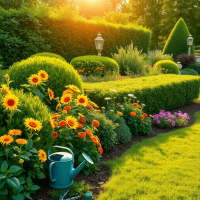
Late summer is a weird little window.
Your yard is still in “summer mode”, things are growing, the light is golden, but you can feel the season turning. The heat stress shows up in patches. Flowers start looking tired. Shrubs get that slightly wild look. And meanwhile, fall is right around the corner, which means whatever you do now either sets you up nicely… or you spend September scrambling.
The good news is late summer landscaping can be simple. It’s not about ripping everything out and doing a full makeover. It’s mostly about a few high impact fixes that make the front of your house look cleaner, more intentional, and honestly just cared for.
Here are the late summer landscaping tips that actually boost curb appeal, without turning your weekends into a never ending yard project.
Do a curb appeal “walk by” first (it matters)
Before you touch a tool, do this.
Walk or drive past your home like you are seeing it for the first time. Then stand on the sidewalk and look at your front yard for 30 seconds. No judging, just noticing.
You will usually spot the same things every time:
• Overgrown edges swallowing the walkway
• One messy shrub that ruins the whole line
• Bare spots in the lawn that pull your eye
• Faded mulch that makes everything look dusty
• Beds that used to look defined but now look… melted
Make a short list. Three to five items. That’s it. Curb appeal is more about fixing the obvious stuff than adding new stuff.
Edge your beds and walkway (the fastest visual upgrade)
If I had to pick one thing that gives the biggest “professional” look fast, it’s edging.
Crisp edges make everything look intentional, even if your plants are a little tired. It’s like a haircut. Same person, different vibe.
What to edge in late summer:
• Along the driveway
• Along the sidewalk
• Around tree rings
• The border between lawn and planting beds
You can use a manual edger, a spade, or a string trimmer if you are careful. The goal is a clean line. After that, blow or rake the debris off hard surfaces. Small detail, big difference.
Prune lightly, not aggressively (late summer is not the time to go crazy)
Late summer pruning is a “less is more” situation.
A lot of people hack shrubs back hard in August because they look overgrown. Sometimes that’s fine, but often it triggers a flush of tender new growth that doesn’t harden off before cold weather. And then you get dieback. And then in spring you wonder why everything looks uneven.
So here’s the late summer approach.
Do:
• Remove dead, broken, or diseased branches
• Trim back growth that blocks windows, paths, or lights
• Shape lightly to restore clean lines
• Cut back perennials that are flopping into walkways
Don’t:
• Hard prune flowering shrubs that set buds for next year (many do)
• Shear everything into tight boxes just because it’s easy
• Take off more than about one third of the plant
If you are not sure, keep it simple: clean up, open it a bit, step back, stop. Refresh mulch, but don’t bury your plants
Mulch is one of those boring things that makes your whole front yard look richer and more finished. Faded mulch makes a home look tired. Fresh mulch makes it look “listed”.
Late summer is a perfect time for a mulch refresh because weeds are still active and soil moisture is still an issue. Mulch helps with both.
A few rules so you don’t accidentally harm things:
• Aim for about 2 to 3 inches of mulch
• Keep mulch pulled back from plant stems and tree trunks
• Do not create mulch volcanoes around trees (it’s a real thing and it’s bad)
If you already have mulch down, you may not need to remove it. Often you can rake it to loosen, top it off lightly, and call it a day.
Color choice matters too. Dark mulch tends to look clean and modern. Natural mulch looks softer and more “classic”. Match it to your home’s style and trim color.
Add late summer color in the simplest way possible
By late summer, a lot of spring and early summer flowers are done. You end up with green. Which is fine, but curb appeal loves contrast.
You don’t need a complicated planting plan here. Think in layers: one or two bold hits of color near the entry, then smaller repeats elsewhere.
• Potted annuals: coleus, petunias, calibrachoa, sweet potato vine
• Heat lovers: lantana, vinca, zinnias, salvias
• Late bloomers: black eyed Susans, coneflowers, gaillardia
• Big dramatic option: ornamental grasses (they start looking amazing late summer)
If you want the quickest impact for the least effort, do two matching containers flanking the front door or garage. Symmetry reads as “tidy” even if the rest of the yard is still a work in progress.
And yes, watering matters. Pots dry out fast in late summer. If you hate daily watering, go with drought tolerant choices (lantana and vinca are forgiving) and mulch the top of the potting mix a bit.
Reseed thin lawn spots now (timing is everything)
If your lawn looks a little beat up by August, you’re not alone. Heat, foot traffic, bugs, drought, all of it stacks up.
Late summer into early fall is actually the best time in many regions to fix thin spots because the soil is still warm (good for germination) but the air starts cooling (less stress). You also usually get more consistent moisture.
Basic patch repair approach:
1. Rake out dead grass and loosen the soil surface
2. Add a thin layer of compost or topsoil if needed
3. Spread grass seed that matches your lawn type
4. Press it in (walk on it lightly or use a roller)
5. Keep it consistently moist until established
If you do nothing else lawn wise, just patch the obvious bare areas that people can see from the street. Those are the curb appeal killers.
One note. If you live in an area with cool season grasses, this timing is ideal. If you have warm season grass, you might focus more on feeding and plugging depending on the variety. The principle stays the same though: fix the visible stuff while conditions are still friendly.
Weed like you mean it (because weeds scream “neglected”)
Weeds are sneaky in late summer. They show up everywhere, and once they seed, you basically bought yourself work for next year.
For curb appeal, you don’t have to be perfect. You just need the front beds to look clean.
High impact weed targets:
• Along the driveway edges
• In cracks in the sidewalk
• Around the base of shrubs
• In mulch beds where they stand out the most
Pull after watering or after rain, when the ground is softer. If you only have 20 minutes, do the “front and center” areas first, the spots people’s eyes land on.
Also, consider a quick mulch refresh after weeding. Mulch covers disturbed soil and reduces the next wave of weeds.
Clean up the “invisible mess” (deadheading, cutting back, and tidying)
Late summer plants tend to do this half alive thing. They are still growing, but also browning. Some look fine from far away and messy up close.
A little tidying goes a long way.
Quick cleanup tasks that improve the look instantly:
• Deadhead spent blooms on annuals and perennials
• Cut back crispy stems on perennials that are done
• Remove yellowing leaves near the base of plants
• Pull out any annuals that are beyond saving
This is also a good time to thin overcrowded areas. If one plant is swallowing another, it reads as chaos from the street. Give each plant a little breathing room. Your beds will look calmer.
Power wash or at least hose down hardscapes
Landscaping is not only plants.
Your walkway, porch steps, driveway edges, even your front curb. Those surfaces collect dirt, algae, and that gray film that builds up over summer. You stop noticing it… until you clean it, and then you can’t unsee the difference.
If you have a pressure washer, great. If not, a stiff broom and a hose can still help. Focus on: • The walkway to the front door
• Front steps and porch
• Driveway apron (the part closest to the street)
• Patio edges that are visible from the front
It makes your whole property feel brighter. Cleaner. Like it’s being maintained, not just survived. Fix the lighting, because evenings are coming
Late summer is when evenings start feeling earlier. Lighting becomes part of curb appeal again, not just a security thing.
A few simple upgrades can make a house look more welcoming at night, and also more expensive, if we are being honest.
Simple lighting wins:
• Replace dead bulbs and clean dusty fixtures
• Add solar path lights (not too many, just enough)
• Highlight one focal point, like a small tree or a feature shrub
• Consider warm white bulbs, not harsh blue white
If your front door area is dim, that’s the first spot to improve. A well lit entry makes everything feel intentional.
Create one focal point, not ten scattered ideas
A common late summer mistake is trying to fix everything by adding random stuff. One new plant here, a statue there, a different color pot, then a garden flag. It ends up looking busy.
Curb appeal loves a focal point.
Pick one:
• A bold container arrangement by the entry
• A cleanly mulched bed with one standout shrub or grass
• A small ornamental tree with a neat ring and underplanting
• A simple row of matching plants along the walkway
Then support it with clean edges and tidy surroundings. That’s the formula. One “wow” moment plus neatness around it.
Water smarter for the next few weeks (deep, not constant)
Late summer watering is tricky because you can waste a lot of water and still have stressed plants. The trick is depth.
Shallow daily watering trains roots to stay near the surface. Deep watering encourages deeper roots, which improves drought tolerance and overall plant health.
Basic guideline:
• Water less often, but longer
• Water early morning if possible
• Prioritize new plantings, containers, and stressed areas
• Use mulch to reduce evaporation
If your city has watering restrictions, even more reason to be targeted. Water what actually affects curb appeal first: the visible beds and the front lawn patches you are trying to establish.
Do a quick “front door zone” upgrade
This isn’t landscaping exactly, but it’s connected. The front door zone is where people look, and it frames the yard.
Late summer is a good time to do small updates that make the whole scene feel put together. A few ideas:
• Replace a worn out doormat
• Add a clean house number (bigger is usually better)
• Trim plants that block the door or porch
• Wipe down the door and hardware
• Add two matching planters, even simple ones
It’s amazing how much better the landscaping looks when the entry area doesn’t look neglected. Plan one fall move now, while you can still think
Late summer is also the moment to set yourself up for fall curb appeal. You don’t have to do it all right now, but you can plan one smart move that pays off soon.
Good “bridge to fall” ideas:
• Plant ornamental grasses now for late season texture
• Identify where you want mums or pumpkins later
• Decide which beds will get a fall mulch refresh
• Mark spots for spring bulbs (you will thank yourself)
This way, you’re not starting from zero in September.
A simple late summer curb appeal checklist (if you want it)
If you want the short version, here it is. These are the moves that make the biggest difference fast:
• Edge beds and hardscapes
• Weed the visible front areas
• Light prune for shape and clearance
• Refresh mulch (2 to 3 inches, no volcanoes)
• Patch bare lawn spots
• Add two containers with late summer color
• Clean the walkway and porch
• Fix exterior lighting
Do that, and your front yard will look sharper even if you change nothing else. Wrap up
Late summer landscaping is not about perfection. It’s about momentum.
You clean the edges, tighten the shapes, bring back color in a couple of strategic places, and suddenly the whole front of the house looks cared for again. Not because you spent a fortune. Just because you fixed what the eye notices first.
If you do one thing this week, edge and weed. Seriously. That alone can make your yard look like it got a mini renovation.
Then add mulch, patch the lawn, toss in a couple of planters. Done. And you roll into fall already looking ahead, instead of catching up.
FAQs (Frequently Asked Questions)
Start with a curb appeal “walk by” by observing your front yard from the sidewalk or street like a first-time visitor. Note obvious issues such as overgrown edges, messy shrubs, bare lawn spots, faded mulch, and melted bed edges. Make a short list of three to five items to address for impactful improvements.
Edging beds and walkways is the fastest way to create a crisp, intentional appearance. Edge along driveways, sidewalks, tree rings, and borders between lawns and planting beds using manual edgers, spades, or string trimmers carefully. Clean up debris afterward for a polished finish.
Late summer pruning should be light and cautious. Remove dead, broken, or diseased branches; trim growth blocking windows or paths; shape lightly to restore clean lines; and cut back perennials flopping into walkways. Avoid hard pruning flowering shrubs that set next year’s buds and don’t remove more than one-third of any plant.
Apply 2 to 3 inches of mulch while keeping it pulled back from plant stems and tree trunks to avoid ‘mulch volcanoes.’ If existing mulch is present, rake it to loosen before topping off lightly. Choose mulch color—dark for modern looks or natural for classic style—to complement your home’s aesthetic.
Use potted annuals like coleus, petunias, calibrachoa, or sweet potato vine near entryways for bold color hits. Incorporate heat-loving plants such as lantana, vinca, zinnias, salvias or late bloomers like black-eyed Susans and coneflowers. Ornamental grasses provide dramatic impact as well. Two matching containers flanking doors create tidy symmetry.
Late summer into early fall is ideal for reseeding because soil remains warm for germination while cooler air reduces stress. To repair thin spots: rake out dead grass and loosen soil surface; then add a thin layer of seed-friendly soil or compost before overseeding. Consistent moisture during this period aids successful germination.