
If you have been house hunting (or even just doom scrolling listings at midnight), you have probably felt it.
Everything decent looks expensive. Everything affordable looks… complicated. Or far away. Or both.
And yet, in most cities, there is a category of places still quietly offering upside. Not flashy, not brand new, not covered in matte black fixtures and “luxury vinyl plank” everything.
Older neighborhoods.
Not “historic district with million dollar carriage houses” older. I mean the normal, lived in areas with 1950s to 1980s housing stock, mature trees, weird little additions, cracked sidewalks, and a corner store that has looked the same since 2003.
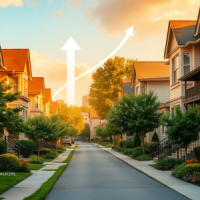
In 2026, those neighborhoods are where a lot of the hidden deals are going to come from. Not because they are “cheap” in some universal sense. But because the pricing is still less efficient. There is more mismatch between what people see on the surface and what the underlying value is.
That mismatch is where upside lives.
Let’s talk about what’s actually happening, what to look for, and how to avoid the traps. Because yes, older neighborhoods come with traps. Some are expensive. Some are just annoying.
Why older neighborhoods are mispriced (in a good way)
Newer areas are easy to price.
They are built around comps that look the same, on streets that were poured in the same year, with floor plans that differ by maybe a bonus room. Appraisers like them. Buyers understand them. Lenders understand them. Even the photos look similar.
Older neighborhoods, on the other hand, are messy.
One house is renovated. The next one has original windows and a roof from the Obama administration. One lot is a quarter acre. The next is tiny but has an oversized garage. One street is adorable. The next street over has traffic and no sidewalks.
That variation makes pricing less “clean”. Which means deals can slip through. Especially when the seller is tired, or the property needs boring work, or the listing agent doesn’t really know how to market anything that isn’t move in ready.
And in 2026 specifically, you are also seeing:
• More aging in place homeowners finally selling, often after decades. • More inherited homes hitting the market with deferred maintenance. • Investors rotating out of older rentals because insurance, taxes, and repairs are up.
• Buyers still clustering around new builds because they feel safer, even when the math is worse.
So you get more supply, more weird listings, and a bigger gap between “looks nice in photos” and “is actually a solid buy”.
The 2026 buyer mindset creates opportunity (and it’s kind of predictable)
A lot of buyers in 2026 are extremely payment focused. Not price focused. Payment.
Higher rates did that. People run the numbers and either panic or freeze. So they gravitate toward anything that feels low risk. Turnkey. New systems. Fresh finishes. Less chance of surprise costs.
Totally understandable. But it also means the “boring but fixable” homes get less love. They sit longer. They get price cuts. They attract fewer competing offers.
If you are willing to be a little unsexy about it. If you can tolerate old cabinets for a year. If you can handle lining up an electrician. That is where you can buy at a discount relative to the neighborhood.
Not every time. But often enough that it matters.
What “upside” actually means in an older neighborhood
Quick reality check. Upside is not always “it doubles in two years”.
Most of the time, upside means one or more of these:
1. You buy below the neighborhood’s long term average because the house needs work. 2. You create value through repairs and updates.
3. The neighborhood itself is in an earlier stage of demand.
4. It is not fully “discovered” yet. Rents are rising, small businesses are moving in, renovations are spreading.
5. The property has underused features you can legally improve.
6. ADU potential, garage conversion, basement finish, lot split (rare but real), adding a second bath, adding laundry, reconfiguring layout.
7. The block is better than the listing makes it seem.
8. Sometimes you walk it and go, wait. This is actually nice.
9. The downside is known and priced in.
10. Busy road, odd layout, small bedrooms. Not fatal flaws, just preferences. If the discount is bigger than the downside, you win.
Older neighborhoods tend to offer more of these “levers” than newer areas. Newer areas have fewer levers. Everything is already optimized. And priced accordingly.
The hidden deal types to watch in 2026
These are patterns I keep seeing. The listings that look mediocre online but can be strong buys in real life, assuming you do the homework.
This is the classic. The house looks dated. Old carpet. Yellowed outlets. Maybe wallpaper. The kitchen is functioning but depressing.
A lot of buyers bounce immediately because they want Instagram ready.
But if the bones are decent, the layout is workable, and the location is right, cosmetic ugly is where you can still negotiate in 2026.
The trick is separating cosmetic from systemic.
Cosmetic: paint, floors, fixtures, counters, landscaping, trim.
Systemic: foundation, roof, plumbing supply lines, sewer line, electrical panel, water intrusion, HVAC age and ducting issues, structural movement, mold.
Cosmetic can be budgeted. Systemic can blow you up.
These show up as “as is” or “needs TLC” with minimal disclosure, sometimes because the seller honestly doesn’t know. Or doesn’t want to deal.
In older neighborhoods, these can be amazing deals. Or money pits.
A simple filter: if the home has been owned for 30 to 50 years and looks untouched, assume every major system is near end of life. Then see if the price still makes sense.
And if you buy one of these, do not skip the sewer scope. Seriously. It is one of the most boring inspections and one of the best.
In older neighborhoods, you sometimes find a 900 to 1200 square foot house sitting on a lot that newer neighborhoods would have split into two.
If zoning allows expansion, ADU, or even just a better outdoor setup, land is your hedge. Land is also harder to create.
Even if you never build an ADU, having the option matters. Buyers pay for options.
You know the street where every house is updated and cute. And then there is one oddball. Bad paint. Overgrown yard. It looks sad.
That is often the best deal because buyers compare it emotionally to its neighbors. And they feel like it is a loser. But financially it can be the opposite.
If you can bring it closer to neighborhood standards without over improving, you capture spread.
Over improving is real, by the way. Putting a $120k kitchen into a neighborhood where most kitchens are $35k remodels is how people lose money while “upgrading”.
Some landlords are done. Insurance is up. Maintenance is up. Property taxes are up. Tenant issues are… still tenant issues.
If you find a property that has been rented for a long time, it might be worn. But it might also have been steadily maintained in boring ways, especially if the landlord was competent.
Look for receipts. Ask for a list of improvements. Check permits if your city has an online portal. And then run the numbers like a buyer, not like a dreamer.
How to spot the neighborhoods with real upside (not just hype)
Not all older neighborhoods have upside. Some are stagnant for a reason. Some have constraints that keep values capped. Some have safety issues that don’t improve quickly. Some are dominated by investor owned stock that is being squeezed.
So how do you filter?
Here are signals that tend to matter in 2026.
A neighborhood does not need to be a perfect 10 out of 10 “walk score”. It just needs a few anchors within 10 to 20 minutes on foot.
Coffee shop. Grocery. School. Park. Transit. A cluster of small businesses. A library. Something.
Older neighborhoods often have these because they were built before everything assumed you would drive everywhere. That pattern holds value.
Big city announcements are fine. But they are also priced in fast.
What I like more is quiet reinvestment:
• homeowners replacing roofs and windows
• more permits being pulled for additions and remodels
• small developers doing tasteful infill
• better landscaping and curb appeal creeping block by block
• local businesses opening and surviving longer than a year
You can literally see this by driving around. Or looking at Google Street View changes over time.
If you buy in an already top ranked district, you pay for it. If you buy in a district that is improving, you might get upside.
This is delicate. It is not a simple spreadsheet. But you can look at enrollment trends, new programs, community involvement, and whether families are staying.
And honestly. Talk to people. Parents will tell you the truth faster than any ranking site.
Older neighborhoods can have:
• older sewer and water lines
• mature trees near power lines
• flood risk in low lying areas
• older housing stock that triggers higher insurance premiums
In 2026, insurance is not a footnote. It can change the entire affordability equation.
Before you fall in love with a “deal”, get an insurance quote on the specific address. Not a rough estimate. A real quote.
Also check flood maps. Even if you are not in a flood zone, being near one can matter for resale. The deal killers people ignore in older neighborhoods
This is the part that saves you money. Because the trap with older neighborhoods is thinking every discount is a bargain.
Sometimes the market is discounting the property because it deserves it.
Some foundation repairs are straightforward. Some are ongoing because the underlying drainage is bad, the soil is expansive, or the grading funnels water toward the structure.
When you tour, look for:
• downspouts that dump right at the foundation
• negative grading (ground slopes toward the house)
• efflorescence on basement walls
• musty smell that hits you immediately
• doors that don’t close and cracks that look fresh
You need a good inspector, and sometimes a structural engineer. Yes it costs more. But not as much as being wrong.
Knob and tube, old panels, ungrounded outlets. In some areas, this is common.
The problem is not just safety. It is capacity. If you want to add HVAC, EV charging, induction range, hot tub, ADU, whatever. You may need service upgrades.
And in 2026, electricians are not cheap and scheduling can be slow.
Tree roots and older clay lines are a classic older neighborhood problem.
A sewer scope is usually a few hundred dollars. Replacing a sewer line can be many thousands, and it is disruptive.
Do the scope.
Older neighborhoods can be full of additions that were done by “a guy” in 1997. Some of it is fine. Some of it is sketchy. Some of it becomes your problem when you sell.
Ask about permits. Verify. If it is not permitted, price it accordingly and talk to your agent about how it affects financing and resale in your market.
A simple way to evaluate a “hidden deal” in 15 minutes
When you see a listing in an older neighborhood that looks like a maybe, do this quick check before you get emotionally attached.
1. Pull 3 comps that are fully updated in the same neighborhood.
2. Not across town. Not a different school boundary. Same pocket.
3. Estimate the cost to get the subject property close to that standard. 4. Not perfect. Just close.
5. Add a buffer.
6. Older homes surprise you. They just do.
7. Compare your total cost (purchase + repairs) to the updated comps. 8. If you are still below. Good. If you are above, it is not a deal, it is a hobby. 9. Check time and stress.
10. If you are working 60 hours a week and hate contractors, your “deal” might be misery
priced at zero. Put a number on your sanity.
This is not advanced underwriting. It is just preventing obvious mistakes. Renovation choices that actually create value in older neighborhoods
If you do buy an older home for upside, the biggest mistake is renovating like you are designing your forever home on a TV show.
Value is created by removing objections for the next buyer, and modernizing the parts that feel most dated.
In most markets, these tend to move the needle:
• adding or improving a second bathroom (or making the only bath feel modern) • opening up a cramped kitchen, even slightly, without deleting all character • improving lighting (older homes can feel dark)
• adding functional laundry (buyers care a lot)
• improving insulation and HVAC comfort (quiet upgrades, big impact) • curb appeal: landscaping, exterior paint, front door, clean pathways
And one thing people forget. Storage. Older homes often lack it. Adding closets or smart built ins can make a small house live larger.
Do not chase luxury. Chase “feels clean, works well, nothing scary”.
Where the best 2026 opportunities are hiding (even within a single neighborhood)
Even inside a good older neighborhood, the best deals tend to cluster in a few micro areas: • blocks near but not directly on the busy road
• 5 to 10 minute walk from the popular strip, not right on top of it
• edge zones where people assume it is “too far”, but it is actually fine • streets with inconsistent upkeep where the nice houses are quietly pulling the area up This is why you have to walk it. Not just drive through with the windows up. Walk it at different times. Morning. Evening. Weekend. Listen. Look at who is outside. Look at
how people treat their properties. You learn so much in 20 minutes.
The emotional advantage of older neighborhoods (yes, it matters)
This is the part people don’t put in spreadsheets.
Older neighborhoods often feel like places where people actually live. Not just sleep.
Front porches. Mature trees. Neighbors who have been there a while. A mix of ages. A slightly chaotic charm. Sometimes a little rough around the edges, sure.
But if you pick the right pocket, the vibe creates stickiness. People stay. They care. They reinvest.
And that stickiness supports long term value. Even if the market gets weird for a year or two. Let’s wrap up
In 2026, the easiest properties to buy are not always the best deals. They are just the easiest.
Older neighborhoods are where you can still find pricing gaps. Cosmetic ugly homes. Estate sales. underused lots. Landlords selling. The oddball house on the best street.
But the upside is not automatic. You have to respect the boring stuff: sewer lines, electrical, drainage, permits, insurance.
If you do that, and you stay patient, older neighborhoods can give you something newer areas rarely do.
Options. Levers. And a little bit of hidden value that other buyers are too nervous or too picky to go after.
That is the game. Not chasing perfect. Just buying smart, in a place that has room to get better. FAQs (Frequently Asked Questions)
Older neighborhoods are mispriced because of their varied housing stock and conditions, making pricing less straightforward compared to newer areas. This variation allows deals to slip through, especially with sellers who are tired or properties needing work. In 2026, factors like aging homeowners selling, inherited homes with deferred maintenance, and investors exiting older rentals increase supply and create opportunities for buyers.
In 2026, many buyers focus on monthly payments rather than price due to higher interest rates. They prefer turnkey homes with new systems and fresh finishes to avoid surprise costs. This
leaves ‘boring but fixable’ homes in older neighborhoods less competitive, allowing buyers willing to handle renovations to purchase at discounts relative to the neighborhood.
‘Upside’ typically means buying below the neighborhood’s long-term average due to needed repairs, investing in areas early in demand growth, improving underused property features legally (like ADUs or basement finishes), discovering better-than-listed block qualities, or capitalizing on known downsides that are priced into the discount. Older neighborhoods offer more of these value-adding levers than newer areas.
Buyers should look for ‘cosmetic ugly’ homes—properties with outdated aesthetics but solid structure—and estate sales or inherited homes with deferred maintenance often sold ‘as is.’ These listings may appear mediocre online but can be strong buys if buyers do thorough homework and distinguish between cosmetic issues and systemic problems.
Cosmetic issues include paint, flooring, fixtures, counters, landscaping, and trim—these can be budgeted for renovations. Systemic issues involve foundation problems, roof condition, plumbing supply lines, sewer lines, electrical panels, HVAC age and ducting issues, structural movement, or mold—these can lead to costly surprises and should be carefully inspected before purchase.
Many buyers gravitate toward new builds because they feel safer with turnkey condition, new systems, and fewer chances of surprise costs. This preference persists even when the financial math may not be as favorable as purchasing a fixable home in an older neighborhood that offers more value through renovation potential.